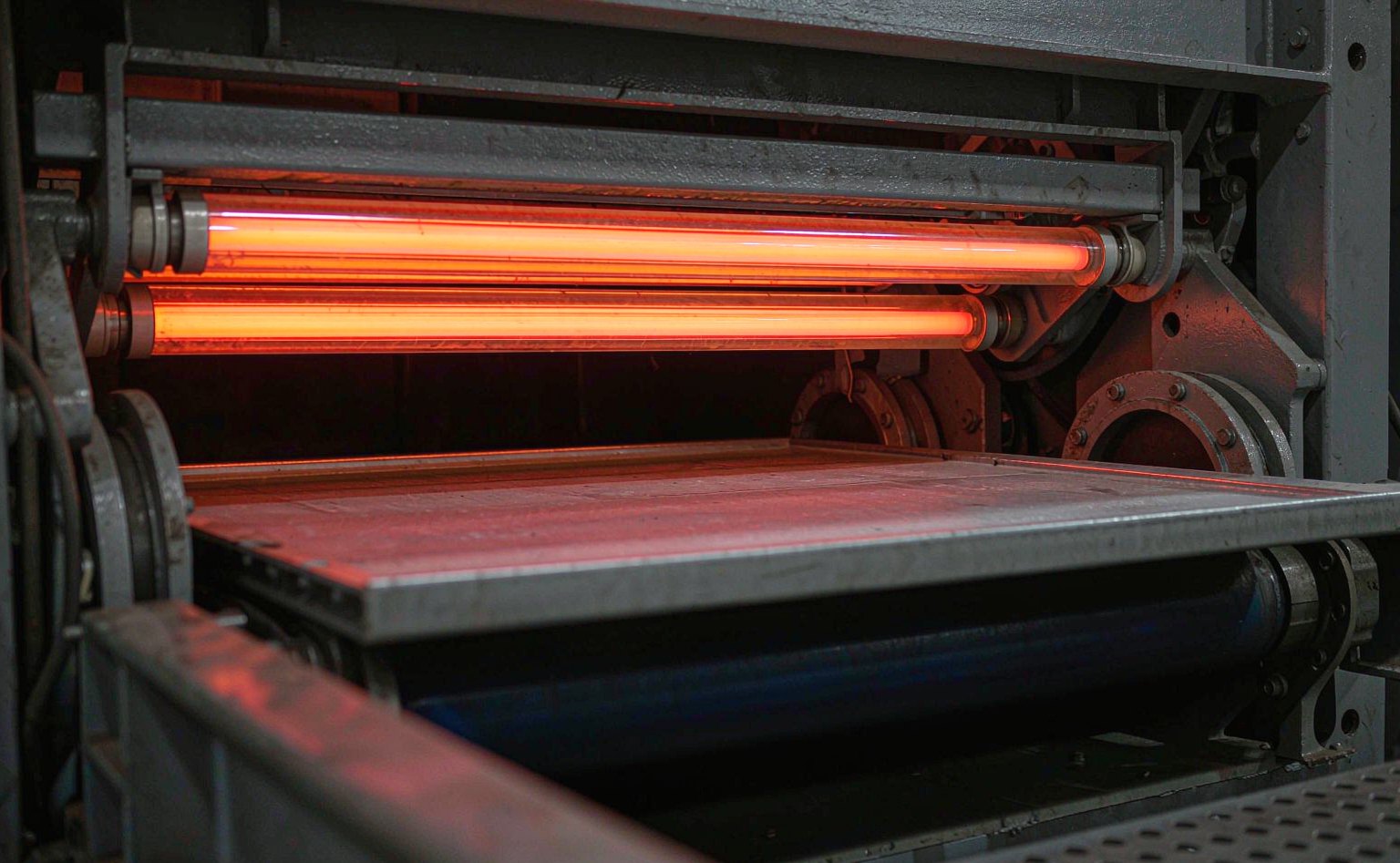
Quartz infrared emitter tubes glowing inside an industrial heating oven

Infrared & ultraviolet quartz lamps · Nanjing, China

Quartz IR & UV lamps, built to your drawing.

We develop, design and manufacture infrared emitters, complete IR heating systems, ultraviolet radiation sources and xenon flash lamps. Single tubes from 8 mm, twin tubes up to 5 metres, gold or white ceramic reflectors — produced to your sample or drawing, not only to a catalogue.

0.8 – 2.7 µmShort to medium wave
Up to 5,000 mmTwin-tube length
600 – 1,000 °CReflector service temperature
Four IR typesShort wave, fast medium wave, medium wave and carbon medium wave
10+ yearsEngineering experience in infrared and ultraviolet lamps
30+ yearsIR heating system experience, from our engineer in Germany
4 continentsExport to Europe, the Americas, Asia and Africa

What we make

Two lamp families, one quartz workshop.

Infrared for drying, forming, sintering and welding. Ultraviolet for disinfection, curing and photochemical work. Both come out of the same workshop, so the tube, the filament, the reflector and the end cap are matched by one team.

See where they run
Twin tube infrared emitters in an industrial oven IR · 0.8–2.7 µm

Infrared emitters & systems

Radiant heat matched to what your material actually absorbs — and, when you need it, the oven built around it.

  • Short wave — 0.8–1.6 µm, full output in 1 s
  • Fast medium wave — about 1.8 µm, built up to 4.2 m
  • Medium wave — 2.0–2.7 µm, long life, 60 s response
  • Carbon medium wave — fast, high intensity, even heating
Explore IR emitters
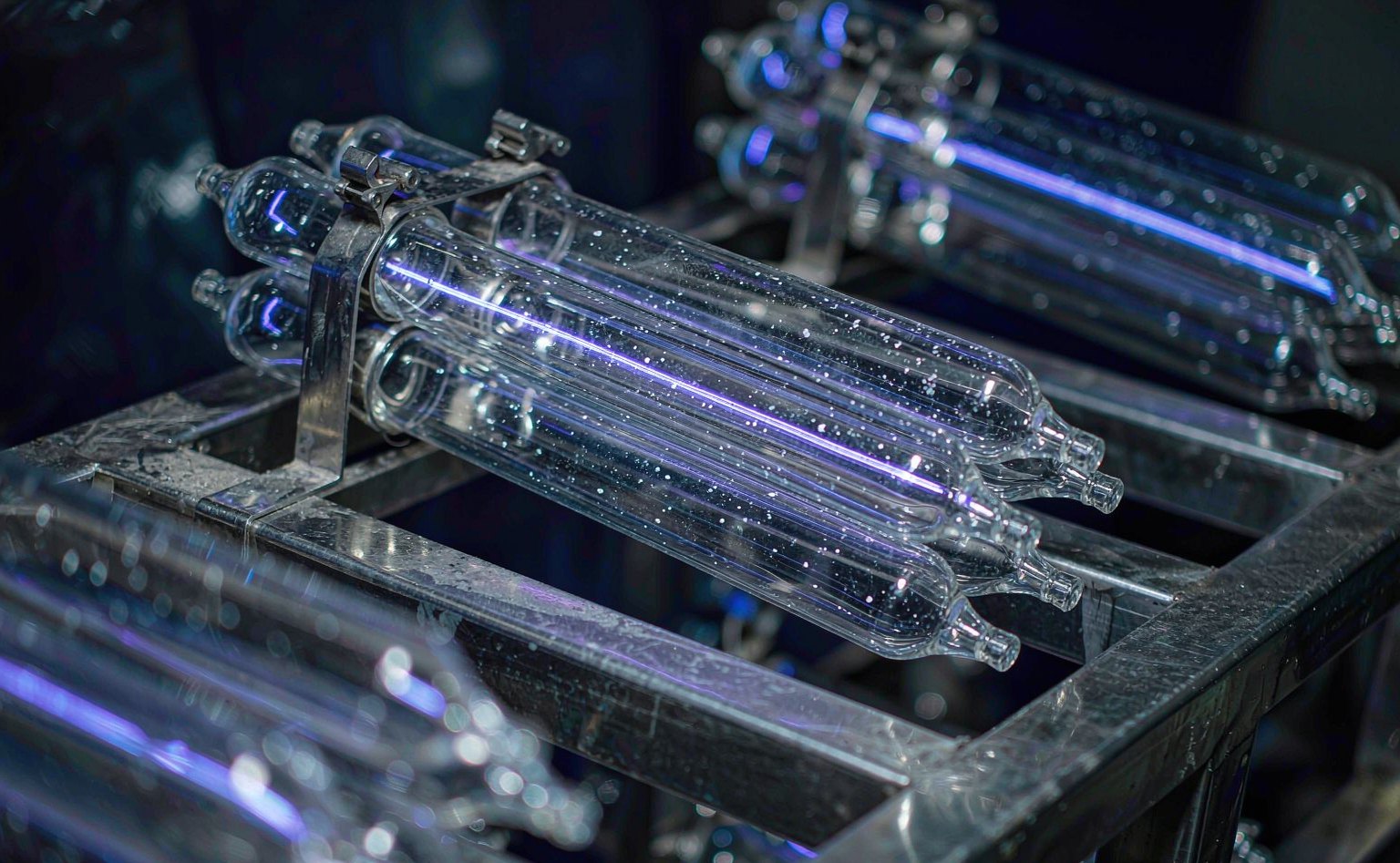
Ultraviolet quartz lamp tubes in a stainless steel reactor UV · 185–400 nm

UV & flash lamps

Ultraviolet radiation sources for water, air, surfaces and curing — plus xenon flash lamps for solar simulators and pulsed-light work.

  • Low-pressure and high-output germicidal lamps
  • Medium-pressure UV for curing and AOP
  • Xenon flash lamps for PV solar simulators
  • Quartz sleeves, vessels and windows to match
Explore UV & flash lamps
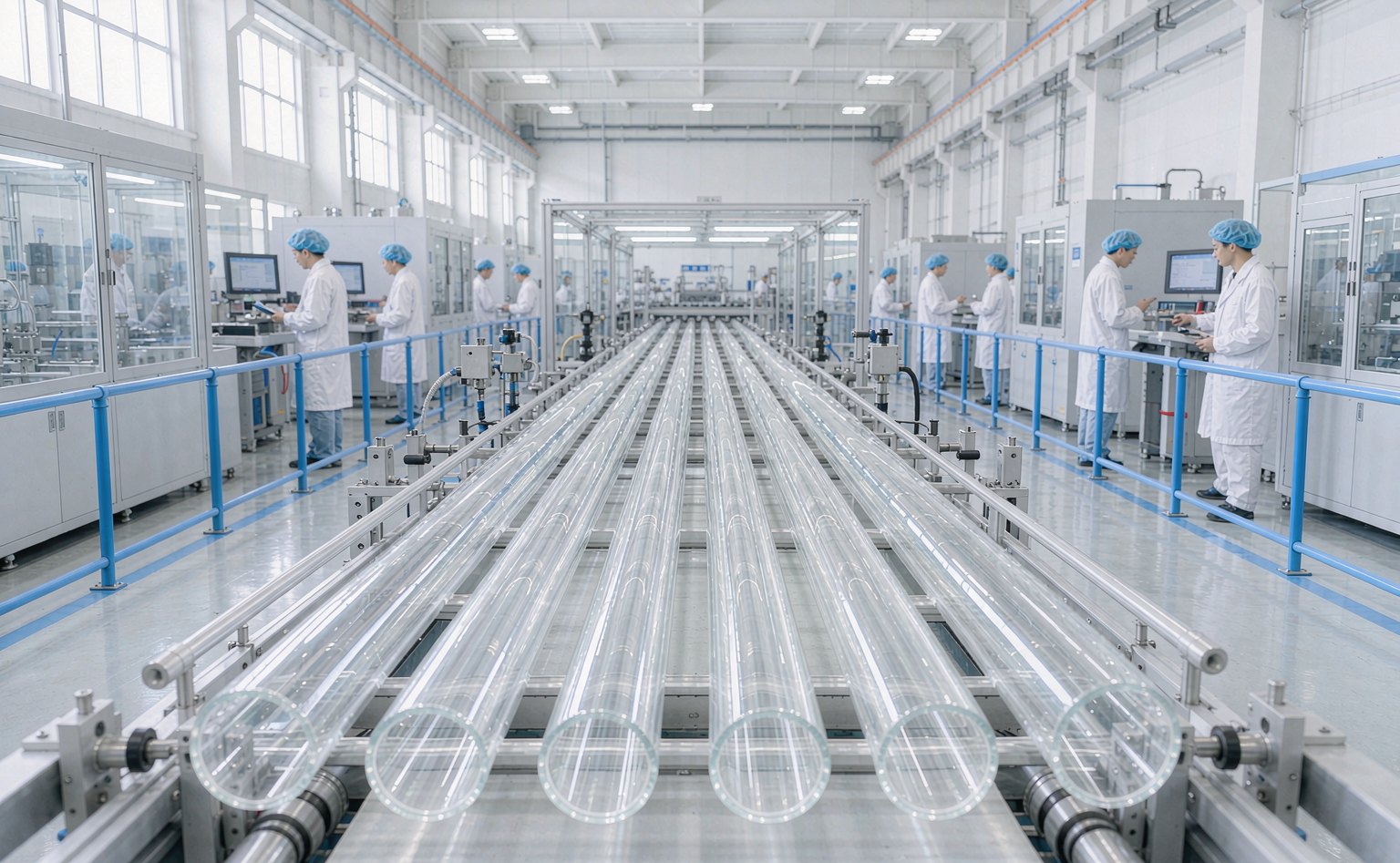
Quartz tube handling in the production workshop
18×9 – 33×15 mm Twin-tube sections we build, in more than ten internal constructions

Tube, reflector, quartz

The envelope decides the result.

Two emitters can draw the same watts and behave completely differently, because what reaches the product depends on the tube, the coating behind it and the distance to the surface. We control all three, so a repeat order behaves like the first one.

  • Single and twin tube, to 5 metres

    Single tubes from 8 to 20 mm diameter and 1,200–4,000 mm long; twin tubes in 18×9, 23×11 and 33×15 mm sections up to 5,000 mm.

  • Gold, white ceramic or ruby

    A gold layer reflects more than 90% of the infrared and survives about 600 °C; white ceramic reflects around 70% but takes 900–1,000 °C; ruby softens the intensity where the product is too easy to burn.

  • Quartz parts in the same shipment

    High-purity tubes, vessels, flanges and optical quartz for the sleeve, window or chamber around the lamp — ordered, packed and shipped together.

See tube dimensions

Applications

Ten industries that run our emitters.

Printing, paint, textile, photovoltaic, mechanical, medical, building material, glass, food and packaging. Each one has its own failure mode — scorched edges, uneven cure, film that will not shrink — and each is solved with a different wavelength and reflector.

All applications

Printing & inks

High-speed printing, varnishes and ink drying on web and sheet presses, with short wave for fast line speeds.

Short wave · twin tube

Paint & powder coating

Car body shell drying and powder coating gel-out, where the film has to cure without the substrate being cooked.

Medium wave

Photovoltaics

Sintering, series welding and PECVD coating, plus xenon flash lamps for solar simulator testing.

Short wave · flash lamps

Glass

Bending, laminating, glass cutting and coating — including the long twin tubes needed for wide furnaces.

Twin tube · 33×15

Food & baking

Pastry and poultry baking, tea drying and can sterilisation, where heat has to be clean and repeatable.

Medium & carbon wave

Textile & non-woven

Fabric drying and textile print drying, with zoning that follows the width of the web.

Fast medium wave
10+Years our engineers have spent on IR and UV lamps
30+Years of IR heating experience from our German engineer
5,000mmLongest twin-tube emitter we build
4Infrared wavelength families in production

IR heating systems

We build the oven, not just the lamp.

An emitter is only half the answer. We design and build infrared heating equipment — single modules, retrofits and complete lines — around the object being heated, its shape and the distance it has to travel.

Discuss a system

High efficiency

Quartz emitters switch on and off in seconds, which shortens the cycle and evens out the heating of the part.

Seconds, not minutes

Energy only where it is needed

Because the emitters respond instantly, heat can be concentrated on the zone that needs it instead of warming the whole chamber.

No idle load

Compact design

The small section of a quartz emitter simplifies both the machine design and the maintenance of the heating zone.

Easier retrofit

How an order runs

From a sample or a drawing to a shipping carton.

Most of what we make is not on a shelf. It starts with the part you already use, a drawing, or four numbers: length, power, voltage and what is being heated.

Start a specification

Sample or drawing

Send the lamp you are replacing, or your drawing with length, diameter, wattage and voltage. A photo with a ruler is usually enough to quote.

Wavelength & power match

We check the emitter against the absorption of your material and the geometry of your machine, and say so if a different type would work better.

Sample build

Short runs are made to the same construction as production, so what you validate is what arrives in the carton.

Batch & export packing

Every tube is checked for length, wattage and appearance, then packed for sea or air freight with the documents your broker asks for.

Send us the lamp you are replacing.

A photo, a drawing or a part number is enough to start. You will get the wavelength, power and price from an engineer — not a catalogue page.